# Overthinking Is More Than Just Excessive Thinking
Overthinking is not simply “thinking too much.” Psychologically, this draining habit is defined as rumination: a repetitive, unresolved thought cycle that offers no real solutions. When mentally fatigued or emotionally overloaded, our minds fixate on trivial details and replay insignificant moments instead of processing problems effectively. This quiet mental burnout is prevalent among modern Western readers, yet most people struggle to break this exhausting loop.
I experienced this firsthand on a quiet weeknight. I found myself endlessly replaying a casual daytime conversation with no conflict, misunderstanding, or real issue to resolve. Even so, my mind fixated on tiny details, trapped in dull, unproductive rumination. There was no panic or extreme stress — just persistent mental looping that drained my focus and inner peace.
# A Casual Tarot Pull That Reflected My Inner State
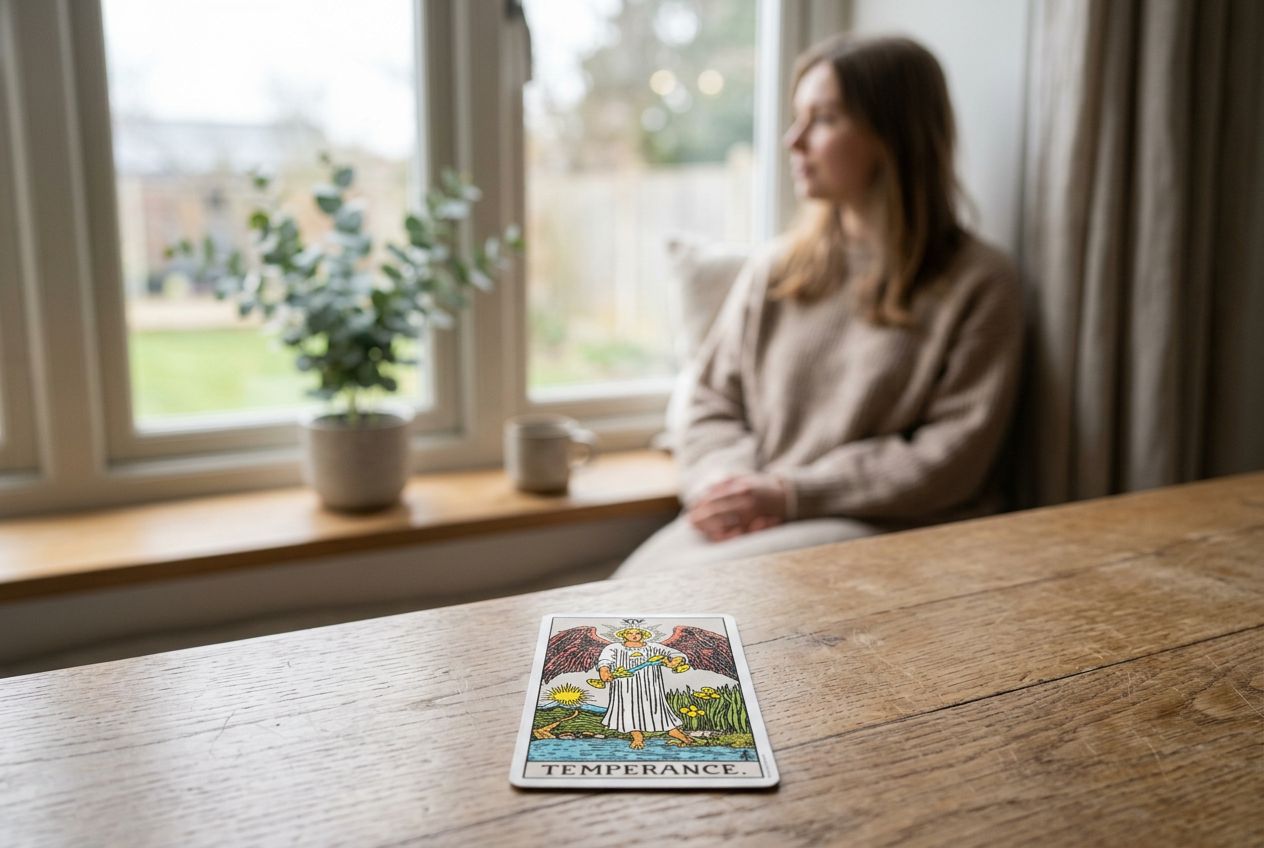
Seeking a simple way to calm my scattered mind, I browsed for gentle self-reflection tools and tried a free online tarot reading. I had no interest in fortune-telling or fate predictions, only wanting a neutral way to ease my mental restlessness. After a quick virtual shuffle, I drew [Temperance](https://tarotcardpro.com/zh-CN/tarot-guide/), one of the most grounding Major Arcana cards for emotional and mental balance.
Temperance is widely known as the card of harmony, moderation, and inner alignment. Unlike intense cards that signal crisis or drastic life changes, it carries a soft, stabilizing energy designed to restore balance to chaotic inner states. Symbolically, it represents the gentle integration of scattered thoughts and frayed emotions. It serves not as a predictive tool, but as a reflective mirror, highlighting when our minds are out of sync and stuck in unbalanced, repetitive thinking patterns.
# The Real Lesson Behind Temperance’s Quiet Energy
What impacted me most was not the card’s traditional symbolism, but the subtle mental shift it inspired. The reading offered no instant answers or quick fixes for my looping thoughts. Instead, it guided me out of extreme, all-or-nothing thinking and helped me view my trivial worries with gentle objectivity. For the first time that night, I stopped being consumed by rumination and began observing my thoughts from a calm, balanced perspective.
This aligns with core psychological principles. Mindfulness, journaling, and symbolic self-reflection tools do not directly stop overthinking. Instead, they create healthy space between thoughts and reactions, softening rigid mental cycles and helping us avoid blind, repetitive over-analysis. Temperance embodies this exact healing mechanism: it encourages steady, gradual adjustment rather than forced resolution.
Many tarot enthusiasts overlook Temperance’s transformative power, dismissing it as too gentle or uneventful compared to dramatic cards. Yet it is one of the most practical cards for anyone facing daily anxiety, mental fatigue, and persistent rumination. It never predicts crisis or misfortune. Instead, it delivers a vital reminder: true mental clarity comes from balanced thinking, not obsessive overthinking or forced mental control.
# Final Thought: Clarity Always Comes After Calm
My rumination did not disappear instantly after the reading, nor did a sudden insight fix my overthinking habit. But I gained valuable self-awareness: I could distinguish genuine reflection from meaningless repetition. Overthinking cannot be stopped through forced analysis. It fades only when we stop fixating on thought content and recognize the looping pattern itself.
Temperance shares a psychology-backed truth: an overactive mind needs balanced adjustment, not more thoughts or stricter self-criticism. Tarot at its core is not future-telling. It is a gentle self-awareness practice that helps us identify unhelpful mental habits, restore inner harmony, and regain peaceful control over our chaotic, overactive minds in daily life.